Your eyes are constantly moving, even when you aren’t consciously aware of it. Every glance, page of text, moving car, and conversation requires your brain to coordinate vision, attention, and movement in real time. By looking more closely at how the eyes move, we can gain another window into how the nervous system is processing and responding to the world.
Looking Beyond Vision: How Eye Movements Reflect the Nervous System
By Dr. Carly Carafa, DC, DACNB
The Basic Eye Movements
We make many different types of eye movements throughout the day, but three of the most useful to understand are saccades, pursuits, and optokinetic movements.
Saccades: Moving Quickly From One Target to Another
Saccades are our fast eye movements. They allow us to quickly shift our gaze from one point to another. For example, if you’re looking at your phone and someone across the room starts talking to you, your eyes quickly shift from your phone to that person. That rapid movement is a saccade.
We also use saccades constantly while reading. Contrary to what many people assume, our eyes don’t smoothly glide across every word on a page. Instead, they make a series of quick movements followed by brief periods of fixation as we move through the text.
When evaluating saccades, we can measure several characteristics. Latency tells us how long it takes the eyes to initiate a movement after a target appears. We can also evaluate accuracy. Does the eye land directly on the target, or does it undershoot or overshoot? Speed and consistency can provide additional information.
These may seem like small details, but each measurement gives us another piece of information about how the nervous system is controlling the eyes.
Pursuits: Following a Moving Target
Pursuits are our slower eye movements that allow us to follow a moving target. An easy example is watching a car drive past you. Rather than quickly jumping your eyes from one location to another, your eyes attempt to smoothly follow the car as it moves across your visual field.
One measurement we can evaluate is called gain, which describes how closely the movement of the eyes matches the movement of the target. Ideally, our eyes should keep up with the target without constantly falling behind and requiring corrective movements.
Pursuits require the brain to continuously process visual information while predicting where the target is going next. They also rely on neural networks that differ from those primarily involved in saccades.
Optokinetic Movements: A Combination of Slow and Fast
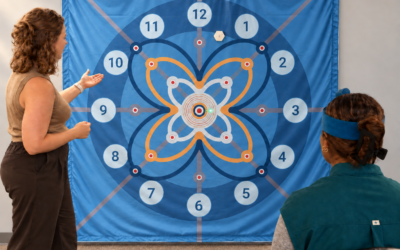
The third movement we’ll discuss is the optokinetic response. Imagine looking out the window while driving down the highway and watching trees or light poles pass by. Your eyes slowly follow one object as it moves across your visual field and then quickly shift to the next object.
This creates an alternating pattern of a slow eye movement followed by a fast eye movement. While much of this response is reflexive, it involves communication between multiple areas of the nervous system, including the visual system, brainstem, and cerebellum.
Because of this, the optokinetic response can provide another useful piece of information during a neurological examination.
Why Are Eye Movements Important?
Eye movements are sometimes described as a “window into the nervous system,” and there is a good reason for that.
Moving our eyes may feel simple and automatic, but controlling them requires communication between many areas of the brain. Rather than having one single “eye movement center,” the nervous system uses interconnected networks involving the frontal and parietal cortex, basal ganglia, cerebellum, brainstem, and other structures involved in vision, attention, motor control, and prediction.
When we evaluate eye movements, we’re therefore asking much more than, “Can this person’s eyes move?”
Can the brain initiate the movement quickly? Can it accurately move the eyes to the target? Can it maintain fixation? Can it smoothly follow a moving object? Can it inhibit an automatic response when necessary? Can it coordinate visual information with movement?
Each of these questions gives us additional information about how different parts of the nervous system are communicating.
For example, saccades rely heavily on networks involving the frontal cortex, which are also involved in attention, planning, decision making, and inhibition. An unusual saccadic response doesn’t automatically mean there is a problem with one specific area of the brain. Instead, it provides another piece of information about how the larger network may be functioning.
The same principle applies to smooth pursuits. Following a moving target requires the brain to process visual information, maintain attention, predict where the target is going, and coordinate an appropriate eye movement, all without requiring us to consciously think about each step.
Eye Movements and Brain Health
This is where eye movements become particularly interesting. Eye movements are controlled by networks throughout the nervous system, and researchers have investigated whether changes in eye movement performance may provide information about neurological and cognitive health.
One area of interest is Alzheimer’s disease. Research has identified differences in certain aspects of eye movement performance in individuals with Alzheimer’s disease compared with healthy individuals of similar age.
For example, a study published in Annals of Neurology evaluated saccadic eye movements in people with Alzheimer’s disease and age matched control participants. The researchers found differences in several aspects of saccadic performance, including the time required to initiate certain eye movements, movement velocity, and accuracy. They also observed difficulty with maintaining gaze in some participants and differences in the ability to suppress reflexive eye movements.
One particularly interesting area of this research involves our ability to inhibit automatic eye movement. When something suddenly appears in our visual field, our natural tendency is to look toward it. However, certain eye movement tasks require us to do the opposite. We have to suppress that automatic response and intentionally look somewhere else.
Although this sounds simple, it requires the brain to coordinate attention, inhibition, planning, and motor control.
This research is interesting because Alzheimer’s disease doesn’t only affect memory. It can also affect attention, executive function, visual processing, and the ability to appropriately respond to information in our environment. Because eye movements rely on many of these same neurological networks, researchers continue to investigate them as a potential way to observe changes in brain function.
It is important, however, to put this research into the proper clinical context. Eye movement testing is not a diagnostic test for Alzheimer’s disease. An abnormal eye movement does not mean that someone has Alzheimer’s disease. Rather, eye movements may provide another piece of information about how the brain is functioning, particularly when combined with a broader neurological and cognitive examination.
You can read the research article here: PubMed: Saccadic eye movement dysfunction in Alzheimer’s disease
What Does This Mean in Everyday Life?
So what does all of this actually mean for the person sitting in front of us?
Our eye movements are directly connected to many things we do every day. Reading requires accurate saccades and appropriate fixation. Following a conversation requires us to shift our gaze between different people and objects. Walking through a busy environment requires us to continuously move our eyes, process visual information, and coordinate that information with the rest of our body.
Driving requires rapid shifts in visual attention, the ability to track moving objects, and the ability to process a constantly changing visual environment. Even watching a sporting event requires the eyes and brain to work together to predict where a moving object is going next.
A clinical example of how eye movements reflect changes in the nervous system is post-concussion syndrome, a common condition we see in our office. Following a concussion, some individuals experience ongoing symptoms such as headache, dizziness, visual fatigue, difficulty reading, or feeling overwhelmed in visually busy environments. While these symptoms can have multiple causes, changes in eye movements may contribute to the difficulties people experience. Saccades, or the fast eye movements mentioned earlier, rely on several areas of the brain, including the frontal eye fields and other frontal lobe networks involved in attention, planning, and inhibition. After a concussion, these networks and connections to other parts of the brain may be affected, potentially changing how efficiently the eyes move.
For example, a person recovering from a concussion may take longer to initiate the saccade, have difficulty landing accurately on a target, or struggle with changing their eyes constantly between different points. These changes may make activities such as reading, looking between a computer screen and keyboard, or following a conversation more demanding.
When these systems aren’t working efficiently, a person may notice difficulty reading, visual fatigue, trouble following moving objects, feeling overwhelmed in visually busy environments, or difficulty maintaining visual attention. Of course, these symptoms can have many different causes. That’s why we don’t look at one eye movement in isolation.
How We Use Eye Movement Testing at Delta Neuro Health
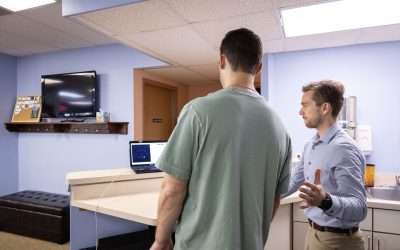
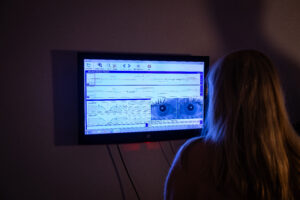
At Delta Neuro Health, eye movements are one piece of a much larger neurological examination. During an initial examination, we use videonystagmography, or VNG, to record eye movements and obtain objective measurements. This allows us to evaluate how the eyes are moving and consider how those movements interact with other parts of the nervous system.
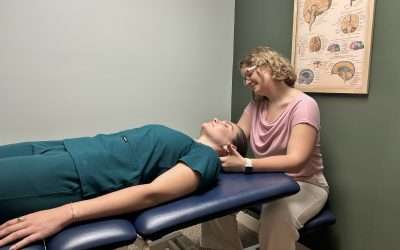
We can then compare our eye movement findings with other components of the examination, including balance, coordination, vestibular function, muscle strength, and other neurological findings. Together, these findings can provide a more complete picture of a patient’s current neurological function.
From there, we develop an individualized care plan based on the patient’s specific findings and goals. For example, consider a patient who has difficulty reading and feels overwhelmed when walking through a busy grocery store. We can use VNG and recorded eye movements to look for relationships between the patient’s symptoms and objective findings.
If the examination demonstrates difficulty with saccades, for example, we may incorporate targeted exercises designed to challenge the neural networks involved in saccadic control and visual processing. The goal is not simply to “exercise the eyes,” but to use specific sensory and motor challenges to engage the nervous system in a targeted way.
Can Eye Movement Training Help?
This is an area of growing interest in neurological rehabilitation. Research has investigated different forms of eye movement training and visual rehabilitation, including approaches used following neurological injury such as stroke.
For example, one study investigated eye movement based rehabilitation following stroke and reported clinical improvements in participants. While research in this area is still developing and results depend on the specific condition and intervention, it highlights an important concept: eye movements aren’t simply something we observe. They can also be part of a broader neurological rehabilitation strategy.
You can read more about this research here:
https://www.frontiersin.org/journals/neurology/articles/10.3389/fneur.2016.00003/full#S3
The Bigger Picture
Our eyes are constantly giving the brain information about the world, while the brain is constantly telling the eyes where and how to move. By evaluating these movements, we can gain another perspective on how the nervous system is functioning. Eye movements don’t tell us everything, and they shouldn’t be interpreted in isolation, but they can provide valuable objective information when combined with a comprehensive neurological examination.
At Delta Neuro Health, that’s the bigger picture we’re interested in: not just how the eyes move, but what those movements may tell us about how the nervous system is processing, coordinating, and responding to the world.
Interested in an assessment or a free phone consultation?
Call us at 614-706-2093 or visit www.deltaneurohealth.com to schedule a consultation.