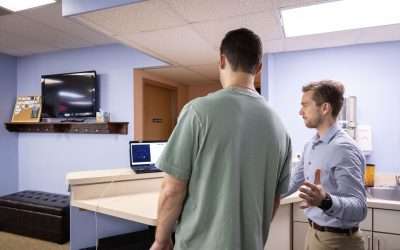
Rewiring Movement: Inside the Neurofascial System, By Dr. Carly Carafa, DC
An Immersive Clinical Experience
During my six-month internship to complete my doctorate in chiropractic, I interned at the largest functional neurology clinic in the world, Georgia Chiropractic Neurology Center, under the guidance of Dr. Marc Ellis, the founder of Myosynaptics. This experience shaped my understanding of how the body truly functions. Not as isolated symptoms, but rather a deeply connected system working together. I’m passionate about using MyoSynaptics in practice today because it can truly help patients uncover the root cause of their challenges, restore balance, and achieve lasting results.
The Neurofascial System
So, what is MyoSynaptics? At its foundation, MyoSynaptics is built on the concept of the neurofascial system, which combines the nervous system and the fascial system into one interconnected network. The nervous system is constantly receiving and interpreting information. Its organizing how we move, react, and regulate internal processes. Functionally, our fascial system is a continuous web of connective tissue that surrounds and penetrates everything in our body. It wraps around muscles, joints, organs, and even nerves. Beyond its structural role, fascia is highly sensory, filled with receptors that continuously send information to the brain about position, tension, pressure, movement, and internal state. Together, these systems allow the body to sense itself and respond appropriately to the environment.
Rethinking Movement: A Brain-Driven Process
Our bodies are incredibly fascinating in how they respond to their environment. Movement is not simply the result of muscles contracting. It is the brain’s response to sensory input, much of which comes from fascia and joints. When this input is clear and accurate, movement tends to be smooth, stable, and efficient. However, when input becomes distorted due to injury, inflammation, stress, or long-term compensation patterns, the brain adapts. These adaptations are driven by neuroplasticity, which can be either beneficial or maladaptive. For example, changes within fascia, such as scar tissue, can alter the signals being sent to the brain. If treatment focuses only on breaking down scar tissue, it addresses just one piece of a much larger puzzle. A patient coming in for post-shoulder surgery who cannot complete a full range of motion is an example of this. MyoSynaptics allows us to break up scar tissue and fascial adhesions while the patient is moving their shoulder to help increase motion while also decreasing pain.
The MyoSynaptics Approach
MyoSynaptics takes a more comprehensive approach by addressing both the tissue and the nervous system. It is a layered neurofascial system designed to improve how the brain interprets and organizes movement. Rather than relying on force or chasing symptoms, it emphasizes gentle, highly specific input into different layers of fascia and joint structures. This approach is particularly beneficial for individuals who are sensitive to light, sound, or touch, as the work is subtle yet precise. Many patients I work with come in with these symptoms, so they appreciate the light sensation. These same patients later have reported a decrease in light, sound, and touch sensitivity with the help of brain and body rehabilitation.
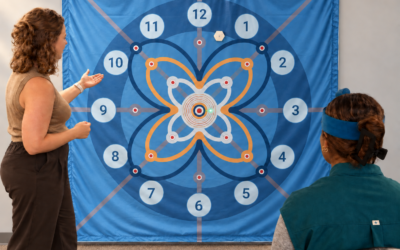
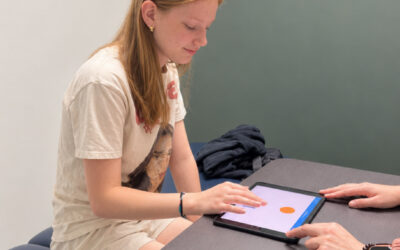
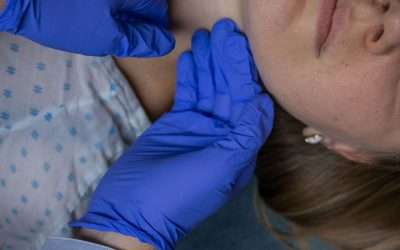
The technique involves targeted fascial mobilization to restore glide within connective tissues and joints, while delivering accurate sensory input back to the nervous system. It is also integrated with functional neurology strategies, including eye movement training, vestibular input, proprioceptive reeducation, and exercises that support autonomic regulation. These elements help stimulate and refine the brain’s ability to coordinate posture, movement, and internal balance. For example, if a patient comes in with cervicogenic headaches and POTS, using soft, targeted fascial pulls on the neck can help patients understand where their head and neck is in space. They therefore then have a better understanding of how to use their neck properly. This can decrease headache frequency and intensity.
At its core, MyoSynaptics is an integrative clinical system that brings together functional neurology, gentle fascial work, joint mechanics, and sensory-based rehabilitation into one cohesive framework. It does not focus on isolated symptoms but instead considers how the brain, spinal cord, peripheral nerves, fascia, and joints function as a unified network. The goal is not force, but precision.
By refining the quality of sensory input, this approach allows the nervous system to recalibrate. As the brain begins to receive clearer and more accurate information, it becomes better at organizing movement. This leads to improvements in body awareness, coordination, joint stability, and autonomic balance, along with increased resilience to physical and emotional stress.
Ultimately, when the brain understands the body more clearly, it no longer needs to rely on compensatory patterns. Movement becomes more efficient, stability improves, pain often decreases, and overall performance increases. Instead of zooming in on isolated symptoms, it zooms out and asks a bigger question: how is this entire system working together?
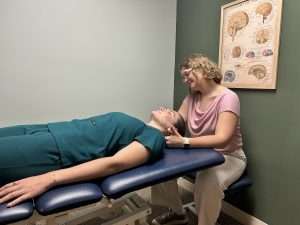
My interpretation and application of MyoSynaptics and functional neurology have helped patients experiencing both chronic and acute conditions by emphasizing the connection between the brain and body. In practice, I have already seen encouraging patient outcomes, including reduced head pressure, improved hearing, fewer headaches, and increased mobility in the shoulders and neck. The positive responses continue to grow each day. This gentle yet highly effective technique can be applied to a wide range of conditions commonly seen in our office. Seeing patients regain comfort, confidence, and quality of life through this work is what continues to inspire and drive my passion for helping others heal.
If you’re interested in more information about MyoSynaptics, you can check out the website here: https://www.myosynaptics.com/
Interested in an assessment or a free phone consultation?
Call us at 614-706-2093 or visit www.deltaneurohealth.com to schedule a consultation.