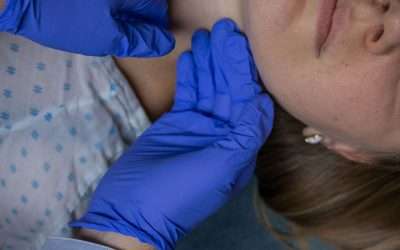
Cervical Stability, Proprioception, and the Brain: Why the Neck May Matter in Dizziness and Motion Sensitivity
When patients struggle with dizziness, motion sensitivity, car sickness, or that disorienting feeling they get while walking through a busy store, the inner ear is often the first place people look.
That makes sense. The vestibular system plays an important role in balance and spatial orientation. But it is not working alone.
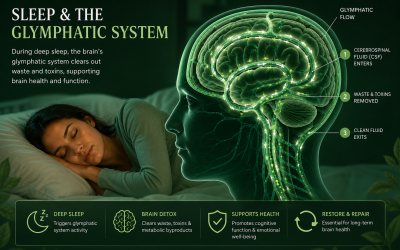
To know where the head and body are in space, the brain constantly compares information from three major sources: the eyes, the vestibular organs of the inner ear, and proprioceptive receptors throughout the body. Some of the most important proprioceptive information comes from the cervical spine.
This is one reason we pay close attention to cervical stability and neck proprioception during neurological evaluations at Delta Neuro Health. In some patients with POTS, persistent post-concussion symptoms, motion sensitivity, car sickness, visually induced dizziness, “shopping aisle syndrome,” or suspected cervicogenic dizziness, the neck appears to be an important part of the picture.
That does not mean every dizzy patient has a neck problem. It also does not mean that strengthening the neck is a universal treatment. It means the cervical spine deserves to be evaluated as part of the larger system responsible for balance, gaze stability, and orientation.
The Neck Is More Than a Stack of Joints
The cervical spine has an obvious mechanical job: it supports the head and allows it to move. But neurologically, the neck is also a dense sensory organ.
Deep cervical muscles—particularly the small muscles around the upper cervical spine and base of the skull—contain a high concentration of muscle spindles. Muscle spindles are sensory receptors that detect changes in muscle length and the speed of that change. They continually send information to the central nervous system about the position and movement of the head relative to the trunk.
This feedback helps the brain answer questions that most of us never consciously consider:
- Is my head centered over my body?
- Did my head move, or did the environment move?
- How quickly and in what direction am I turning?
- What adjustments are needed to keep my eyes, head, and body stable?
Anatomical studies have confirmed that deep cervical and suboccipital muscles are rich in muscle spindles.[1,2] These muscles are therefore built for more than producing force. They provide the brain with a precise, continuous stream of position and movement information.
How Cervical Proprioception Interacts With Vision and the Vestibular System
The brain does not interpret cervical feedback in isolation. Cervical proprioceptive signals converge with visual and vestibular information in the brainstem, cerebellum, and other regions involved in spatial orientation and postural control.
When these signals agree, the brain can build a stable representation of where the head and body are in space. When they do not agree, the result may be a sensory mismatch.
That mismatch can contribute to symptoms such as:
- Dizziness or disequilibrium
- A sense of swaying or instability
- Visual motion sensitivity
- Nausea or car sickness
- Difficulty navigating busy environments
- Head pressure or headache
- Reduced balance confidence
- A feeling of disconnection between the head and body
This does not necessarily mean that a muscle is simply “weak.” The issue may involve timing, endurance, coordination, joint-position accuracy, or the brain’s ability to appropriately weigh cervical information against visual and vestibular input.
In other words, cervical stability is not just about holding the neck still. It is about producing the right amount of control while giving the brain clear and reliable sensory feedback.
What Is Cervicogenic Dizziness?
Cervicogenic dizziness is generally used to describe dizziness or unsteadiness associated with dysfunction of the cervical spine, often in the presence of neck pain, stiffness, injury, or impaired neck movement. One leading theory is that altered cervical proprioceptive input creates a mismatch with information arriving from the eyes and vestibular system.[3–5]
It remains a diagnosis of exclusion. There is no single definitive test, and other vestibular, neurological, cardiovascular, autonomic, medication-related, and medical causes of dizziness must be considered.
That distinction matters. We should not assume that dizziness originates from the neck simply because someone also has neck pain. At the same time, we should not ignore the cervical system when the history and examination suggest that it may be contributing.
Why the Neck Can Be Missed After a Concussion
A concussion and a cervical injury can occur during the same event. The force needed to move the brain inside the skull can also rapidly accelerate, decelerate, or rotate the head and neck.
The symptoms can overlap. Headache, dizziness, nausea, visual discomfort, balance problems, fatigue, and difficulty concentrating may occur with concussion, cervical injury, vestibular dysfunction, or a combination of these.
Research has found altered cervical proprioception in some people with a history of concussion, and cervical symptoms have been associated with a greater risk of persistent post-concussion symptoms.[6,7] A randomized trial also found that patients with prolonged dizziness, neck pain, or headaches after sport-related concussion were more likely to receive medical clearance within eight weeks when cervical spine and vestibular rehabilitation were added to usual care.[8] A later adult trial found improved physical cervical and vestibular measures with added cervicovestibular rehabilitation, although it did not find superior symptom or return-to-function outcomes compared with symptom-limited aerobic exercise alone.[9] That mixed result is a useful reminder that treatment effects depend on the outcome being measured and the patient being treated.
This does not prove that every prolonged concussion symptom comes from the neck. It does support examining the cervical and vestibular systems together rather than treating them as unrelated.
Motion Sensitivity, Car Sickness, and “Shopping Aisle Syndrome”
Walking through a grocery store requires far more neurological work than it appears to.
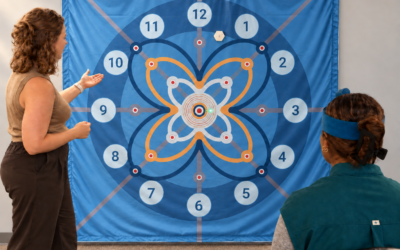
The visual field is filled with shelves, patterns, lights, people, and objects moving through peripheral vision. At the same time, the head turns, the body moves forward, and the neck, eyes, inner ears, and feet must continuously update the brain about motion and position.
If one source of information is unreliable—or if the brain is weighting one system too heavily—the environment can feel visually overwhelming or physically unstable. This is often described as visually induced dizziness or, informally, “shopping aisle syndrome.”
Car sickness is also commonly understood through sensory-conflict models. The visual, vestibular, and somatosensory systems may provide information that does not match what the brain expected.[12] Cervical proprioception is not the only factor in these symptoms, but because it helps describe head-on-trunk position and movement, it may be relevant in selected patients.
Why We Sometimes Simulate Passive Motion
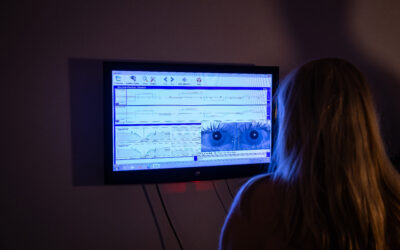
One clinical strategy we have been using is a controlled passive-motion challenge. With the patient seated safely in a wheelchair, we move them in specific directions—forward, backward, through rightward rotation, and through leftward rotation—while monitoring their symptoms and responses.
This is not a validated stand-alone diagnostic test, and a symptomatic direction does not prove that a particular cervical muscle is the cause. We use it as a functional provocation strategy within a much broader neurological, vestibular, autonomic, and cervical examination.
The reasoning is straightforward: passive movement changes vestibular, visual, and somatosensory input without asking the patient to generate the movement through walking. Directional differences may give us clues about how the nervous system responds to acceleration and rotation and whether cervical stabilization demands appear to influence the response.
We look for questions such as:
- Does forward motion feel different from backward motion?
- Is rotation in one direction more provocative than the other?
- Does the patient experience dizziness, nausea, pressure, disorientation, or instability?
- Does gentle, targeted cervical activation change the response when the challenge is repeated?
- Do the findings agree with the rest of the neurological and cervical examination?
The value is not in provoking symptoms for the sake of it. The value is in using a controlled challenge to form and test a clinical hypothesis.
Any motion challenge should be individualized and performed cautiously. It may be inappropriate when there are unresolved neurological warning signs, suspected cervical instability, recent trauma requiring medical assessment, vascular concerns, severe symptom irritability, or other contraindications.
What Targeted Cervical Stability Training Looks Like
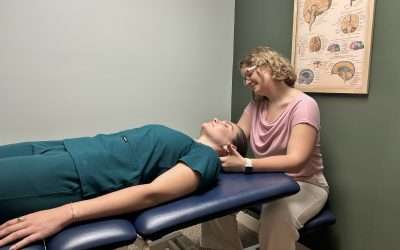
If the examination suggests that cervical sensorimotor control is contributing, treatment may include exercises designed to improve the coordination, endurance, and accuracy of the deep cervical musculature. Research involving neck pain and post-mTBI dizziness suggests that cervical joint-position deficits can be measured and, in appropriately selected patients, may respond to proprioceptive retraining.[10,11]
This is different from aggressively strengthening the neck with heavy resistance. Many patients already overuse larger superficial muscles such as the sternocleidomastoid, scalenes, or upper trapezius in an attempt to create stability. More effort is not always the answer.
Depending on the patient, training may include:
- Gentle activation of the deep cervical flexors and extensors
- Low-load isometric control in carefully selected directions
- Head-on-neck and head-on-trunk dissociation
- Cervical joint-position and repositioning exercises
- Gaze-stability or eye-head coordination tasks
- Progressive endurance training
- Integration with balance, gait, vestibular, or visual-motion exercises
- Gradual exposure to the specific motions that provoke symptoms
The goal is to improve the quality of the signal—not simply to make the neck stronger.
We may then repeat the original movement challenge or other objective measures to see whether the response changes. If targeted activation makes no difference, or if the findings do not fit the broader examination, we reconsider the hypothesis rather than forcing the patient into a predetermined protocol.
Where POTS May Fit Into This Discussion
POTS is an autonomic disorder characterized by orthostatic intolerance and an excessive increase in heart rate upon standing. Cervical stability training is not a treatment for the underlying diagnostic criteria of POTS, and the wheelchair challenge does not diagnose POTS.
However, patients with POTS may also experience dizziness, nausea, brain fog, visual sensitivity, reduced exercise tolerance, and problems with balance or spatial orientation. Some have concurrent migraine, concussion history, vestibular dysfunction, hypermobility, neck pain, or cervical sensorimotor deficits.
In our clinical experience, selected patients with POTS have reported improvement when relevant cervical findings were addressed as one part of a broader plan. That may help reduce a contributing layer of dizziness or motion sensitivity, but it should not be presented as correcting every mechanism involved in POTS.
This is an area where more direct research is needed. At present, the clearest evidence supports cervical assessment and rehabilitation in neck-related dizziness and certain post-concussion presentations. Extending that approach to POTS should remain individualized, clinically reasoned, and appropriately cautious.
What We Have Been Seeing in the Clinic
Across selected cases involving POTS, post-concussion symptoms, car sickness, visual motion sensitivity, shopping-aisle intolerance, and cervicogenic dizziness, we have seen patients improve when cervical stability and proprioception were identified as meaningful parts of the problem.
The important phrase is meaningful parts of the problem.
We are not finding that every patient needs the same neck exercises. We are finding that directional testing, careful examination, and targeted retraining can sometimes reveal a contributor that had been overlooked.
For one person, the main limitation may be vestibular. For another, it may be visual motion processing, autonomic regulation, migraine, or cervical proprioception. Frequently, more than one system is involved.
The purpose of a detailed evaluation is to determine which systems matter most for the individual in front of us.
The Bigger Point: The Brain Needs Accurate Information
Balance and spatial orientation are not produced by one organ. They emerge from the brain’s ability to integrate multiple streams of sensory information and create an appropriate motor response.
The neck sits at an important intersection in that process. It physically supports the head, helps stabilize gaze and posture, and continually informs the brain about head position relative to the body.
When cervical input is inaccurate, poorly timed, or inconsistent, the brain may have to work harder to resolve conflicting information. In the right patient, improving cervical sensorimotor control may make the entire system feel more stable.
That is why we assess the neck as part of the brain-body system—not as an isolated collection of joints and muscles.
Sometimes the missing piece is not another generic balance exercise. It is helping the brain trust where the head is in space again.
Considering an Evaluation?
If you are dealing with persistent dizziness, post-concussion symptoms, motion sensitivity, car sickness, difficulty in busy visual environments, or symptoms that appear related to the neck, a comprehensive evaluation may help determine which sensory systems are contributing.
At Delta Neuro Health in Columbus, Ohio, we evaluate cervical, vestibular, visual, proprioceptive, autonomic, balance, and neurological function together. When cervical stability appears relevant, treatment is selected and progressed according to the patient’s individual findings and tolerance.
This article is for educational purposes only and does not establish a diagnosis or individualized treatment plan. Dizziness can have many causes, including conditions requiring medical evaluation. New, severe, or rapidly worsening symptoms—especially weakness, facial droop, difficulty speaking, fainting, severe headache, chest pain, or difficulty walking—require prompt medical attention.
Research References
- Kulkarni V, Chandy MJ, Babu KS. Quantitative study of muscle spindles in suboccipital muscles of human foetuses. Neurology India. 2001;49(4):355–359. PubMed
- Boyd-Clark LC, Briggs CA, Galea MP. Muscle spindle distribution, morphology, and density in longus colli and multifidus muscles of the cervical spine. Spine. 2002;27(7):694–701. PubMed
- Peng B, Yang L, Li Y, Liu T, Liu Y. Cervical proprioception impairment in neck pain—pathophysiology, clinical evaluation, and management: a narrative review. Pain and Therapy. 2021;10:143–164. Full text
- Li Y, Yang L, Dai C, Peng B. Proprioceptive cervicogenic dizziness: a narrative review of pathogenesis, diagnosis, and treatment. Journal of Clinical Medicine. 2022;11(21):6293. Full text
- De Hertogh W, et al. Dizziness and neck pain: a perspective on cervicogenic dizziness. Frontiers in Neurology. 2025. Full text
- Smulligan KL, et al. Cervical spine proprioception and vestibular/oculomotor symptoms in adults with and without a concussion history. 2024. Full text
- Smulligan KL, et al. The diagnostic utility of cervical spine proprioception for adolescent concussion. 2024. Full text
- Schneider KJ, et al. Cervicovestibular rehabilitation in sport-related concussion: a randomised controlled trial. British Journal of Sports Medicine. 2014;48(17):1294–1298. PubMed
- Langevin P, et al. Cervicovestibular rehabilitation in adults with mild traumatic brain injury: a randomised clinical trial. Journal of Neurotrauma. 2022. Abstract
- de Vries J, et al. Joint position sense error in people with neck pain: a systematic review. Manual Therapy. 2015;20(6):736–744. PubMed
- Hammerle M, Swan AA, Nelson JT, Treleaven JM. Retrospective review: effectiveness of cervical proprioception retraining for dizziness after mild traumatic brain injury in a military population with abnormal cervical proprioception. Journal of Manipulative and Physiological Therapeutics. 2019;42(6):399–406. PubMed
- Lim YH, et al. Cerebral hemodynamic responses to sensory conflict between visual and rotary vestibular stimuli. 2020. Full text
- Johns Hopkins Medicine. Postural Orthostatic Tachycardia Syndrome (POTS). Clinical overview