By Dr. Carly Carafa, DC, DACNB
Before we learn to walk, talk, or control our movements, our brains are already practicing. Primitive reflexes are some of the nervous system’s earliest tools for helping infants move, feed, respond to stimuli, and interact with their environment. As the brain and nervous system mature, many of these automatic responses become less prominent as voluntary movement and higher levels of neurological control develop.
When certain reflex responses remain present beyond the expected developmental period, or when some reflexes reappear later in life, they may provide clinicians with additional information about neurological function. They are not a diagnosis by themselves, and their presence does not necessarily mean that something is wrong. Instead, reflex findings can be one piece of a larger clinical puzzle.
Why Do Primitive Reflexes Matter?
Early in development, automatic reflexes help organize movement and responses to the environment. Primitive reflexes in babies should look like the following;
- React to loud noises or sudden movements
- Grabbing onto your finger when you stroke their hand
- Curling their toes when you place your finger below their toes
- Fan their toes out when you stroke the bottom of their foot.
These natural sets of reflexes help them survive their first few weeks or months of their life. With maturation, their nervous system develops greater control over these automatic responses, allowing movements to become more purposeful and adaptable. The frontal regions of the brain are involved in many higher level functions, including planning, attention, decision making, and inhibition. These functions help us regulate our responses and shift our attention as demands change. When reflexes naturally start to fade, babies should start progressing to the following;
- Tummy time: Builds neck, shoulder, and core strength while encouraging babies to lift and control their head.
- Reaching and grasping: Encourage voluntary movements as babies reach for, grasp, and interact with objects.
- Rolling: Develops whole-body coordination as babies learn to use their arms, legs, and trunk to initiate and control movement.
- Crawling: Promotes bilateral coordination by requiring the arms and legs to work together in an alternating pattern. This coordinated movement may also support the maturation and integration of primitive reflexes.
By the time we are around the age of one, most of our primitive reflexes should disappear. However, in adults, there can be a reappearance of certain primitive reflexes. Sometimes called frontal release signs, these can be associated with neurological conditions affecting the frontal regions or with more diffuse brain dysfunction. However, these findings are not specific to one condition, and they need to be interpreted alongside the person’s age, history, symptoms, and other neurological findings. Research is also exploring the relationship between retained primitive reflexes and cognitive performance. A 2022 study involving autistic participants reported an association between changes in retained reflexes and changes in cognitive measures following an intervention. The authors discussed possible changes in functional connectivity, but these findings do not establish that retained reflexes themselves cause cognitive difficulties or that reducing reflex responses directly produces cognitive improvement (Melilo, 2022)
This distinction is important. Reflex findings can provide useful information without being treated as a single explanation for a person’s challenges.
What Do We Assess?
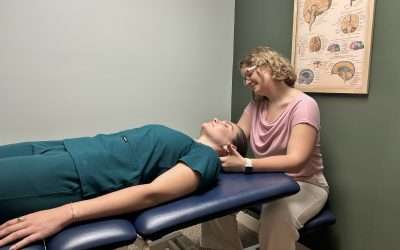
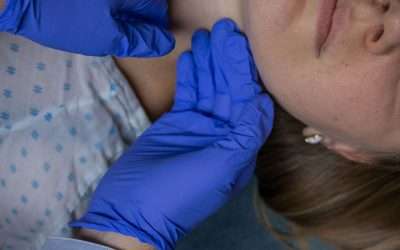
At Delta Neuro Health, reflex testing may be included as part of a broader neurological and developmental assessment. Depending on the individual and the goals of the evaluation, we as functional neurologists may assess responses such as:
ATNR, or Asymmetrical Tonic Neck Reflex: Turning the head can produce a characteristic movement pattern in the arms. This reflex plays an important role during early motor development and normally becomes less prominent as voluntary motor control develops.
STNR, or Symmetrical Tonic Neck Reflex: Movement of the head can influence the position of the arms and legs. This response is involved in early coordination between the upper and lower body.
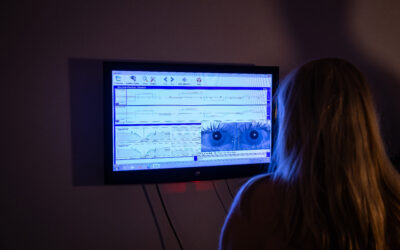
Glabellar reflex: Repeated light tapping between the eyebrows normally produces blinking that becomes less pronounced with repeated stimulation. Persistent blinking can be considered a frontal release sign, particularly when interpreted alongside other neurological findings.
Tromner response: Tapping a finger can produce a flexor response in the fingers. This is a neurological examination finding that can be considered when evaluating reflex activity and upper motor neuron function.
Babinski response: Stimulation of the sole of the foot produces a characteristic response. In adults, an extensor plantar response can be an important neurological finding and may warrant further evaluation depending on the clinical context.
Startle response: A sudden or unexpected stimulus can produce an automatic response. Observing how a person responds to unexpected sensory input may provide additional information about their nervous system and sensory responses.
Keep in mind that these findings should not be interpreted in isolation. A reflex response is one observation within a much larger neurological assessment.
What Might These Findings Mean in Everyday Life?
People with differences in neurological development or regulation may experience challenges with coordination, balance, attention, sensory processing, or executive functioning. These experiences can look very different from one person to another.
For example, a child may have difficulty coordinating movements, remaining organized during a multistep activity, or managing certain sensory environments. An adult may notice challenges with balance, concentration, motor coordination, or adapting to unexpected sensory input. A retained or atypical reflex does not necessarily cause these challenges. Instead, it may give a clinician another area to investigate as part of a comprehensive evaluation.
From Assessment to Individualized Support
At Delta Neuro Health, our goal is to use neurological findings as information rather than labels. If an assessment identifies areas where coordination, motor control, sensory processing, or regulation may benefit from additional support, we can develop individualized activities based on the person’s age, abilities, and functional goals. These activities may include purposeful movement, coordination exercises, balance work, sequencing tasks, sensory strategies, and other activities designed to support more efficient control of movement and responses. At Delta Neuro Health, we create an individualised plan depending on the objective and subjective findings, and may use the following therapies:
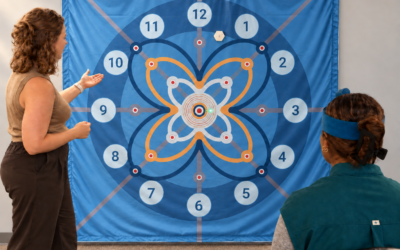
- Frontal lobe exercises: Support executive functioning, attention, and the ability to filter and inhibit irrelevant sensory information from the environment.
- Red light therapy: May support cerebral blood flow and circulation and promote mitochondrial activity, including ATP production, which provides energy for brain cells.
- Cross-crawl exercises: Engage bilateral coordination and may support frontal-lobe functions involved in motor planning, inhibition, accuracy, balance, and coordination.
The goal is not simply to make a reflex disappear. Instead, the focus is on functional skills and how the person moves, responds, learns, and participates in everyday activities. Progress can be gradual. Meaningful changes may include improved coordination, steadier balance, smoother transitions between activities, greater tolerance of sensory input, or more consistent attention. These improvements should be evaluated through real world function rather than through reflex testing alone.
Supporting Regulation at Home
Families can also support healthy neurological development through simple and consistent routines. Predictable schedules can help children understand what to expect. Breaking larger activities into smaller steps can make tasks easier to manage. Purposeful movement and activities that encourage coordination and body awareness can provide opportunities to practice motor control.
Creating an environment that matches a person’s sensory needs can also be helpful. This may include reducing unnecessary noise, providing a quiet space, adjusting lighting, or allowing appropriate movement breaks. Consistency is important. Small, manageable activities practiced regularly can become part of everyday routines without adding unnecessary pressure.
Looking at the Whole Person
Primitive reflexes are one piece of a much larger neurological picture. Their presence should not be used to diagnose a condition, explain every difficulty a person experiences, or assume that one reflex is responsible for a particular symptom. Instead, reflex testing can provide additional information that may help guide further evaluation and individualized support.
At Delta Neuro Health, we approach these findings with curiosity and context. We consider reflex responses alongside developmental history, neurological examination, movement patterns, sensory experiences, cognitive concerns, and everyday function.
A Real Story of Progress
Recently, I had the opportunity to work with a 7 year old girl who presented with multiple retained primitive reflexes along with significant challenges with walking, writing, balance, emotional regulation, sleep, and frequent vomiting.
With individualized care at Delta Neuro Health, combined with consistent support and practice at home, her family began to notice meaningful changes. Over time, she has progressed to activities that once felt difficult, including swimming, dancing, and drawing. Perhaps most importantly, her family has seen a remarkable difference in her ability to regulate and express her emotions. She feels more and moves more like a 7 year old girl.
Her journey is a beautiful reminder that progress does not always happen all at once. Sometimes it looks like a new movement, a new skill, or the confidence to try something that once felt out of reach. With patience, consistency, and a team working together, those small steps can become meaningful milestones.
The goal is not to label a person based on a reflex. The goal is to better understand how their nervous system is functioning today and identify practical ways to support movement, regulation, coordination, and participation in daily life.
Source: Melillo, Robert et al. “Retained Primitive Reflexes and Potential for Intervention in Autistic Spectrum Disorders.” Frontiers in neurology vol. 13 922322. 7 Jul. 2022, doi:10.3389/fneur.2022.922322
Interested in an assessment or a free phone consultation?
Call us at 614-706-2093 or visit www.deltaneurohealth.com to schedule a consultation.